



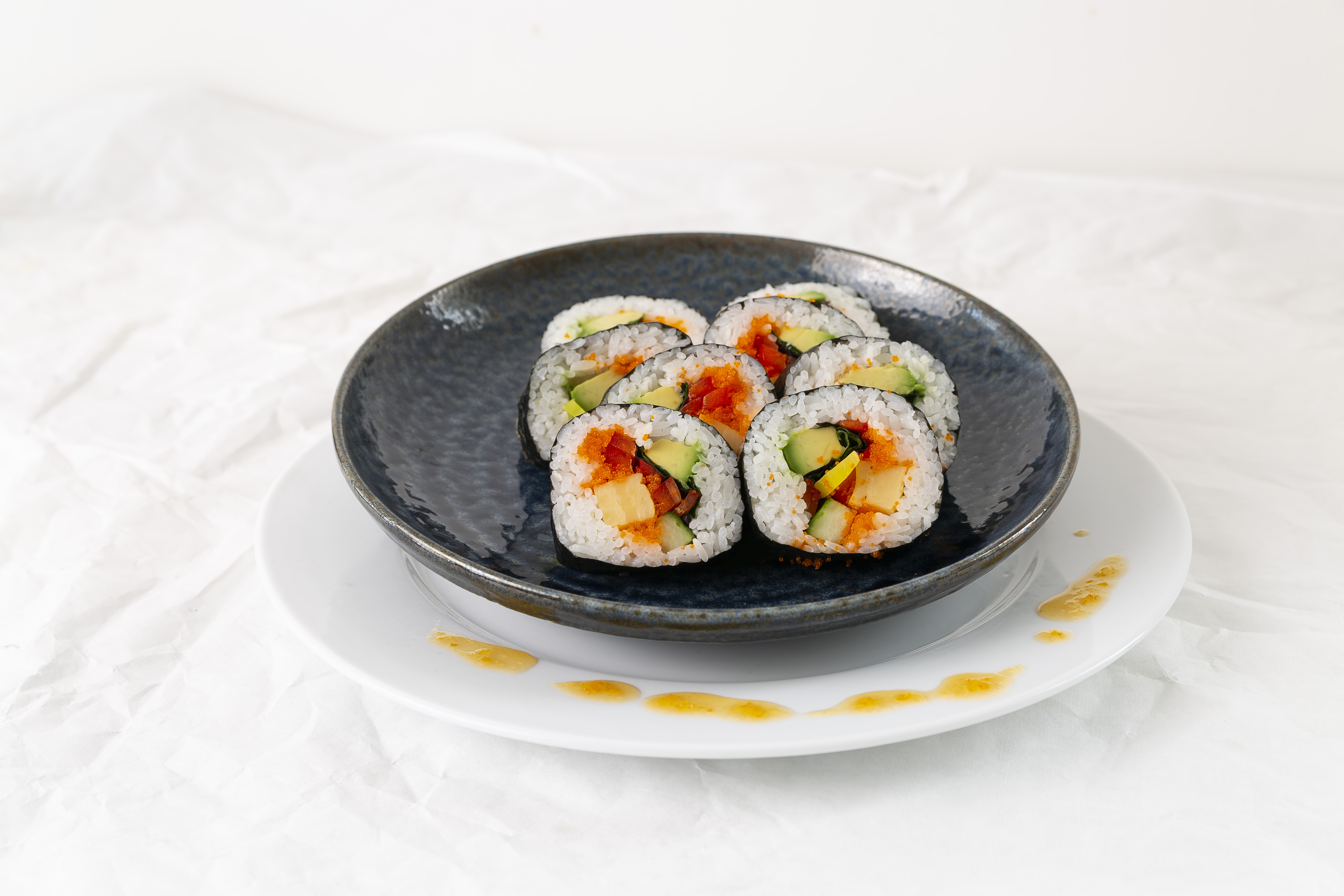
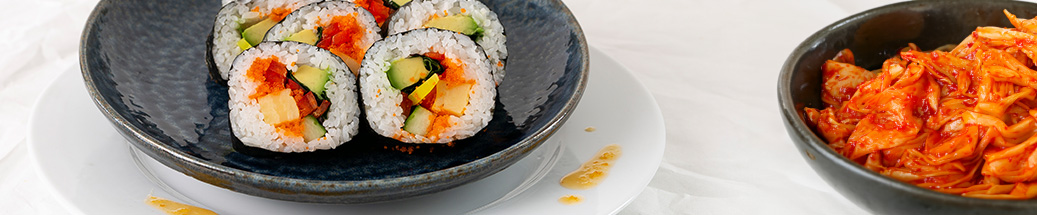
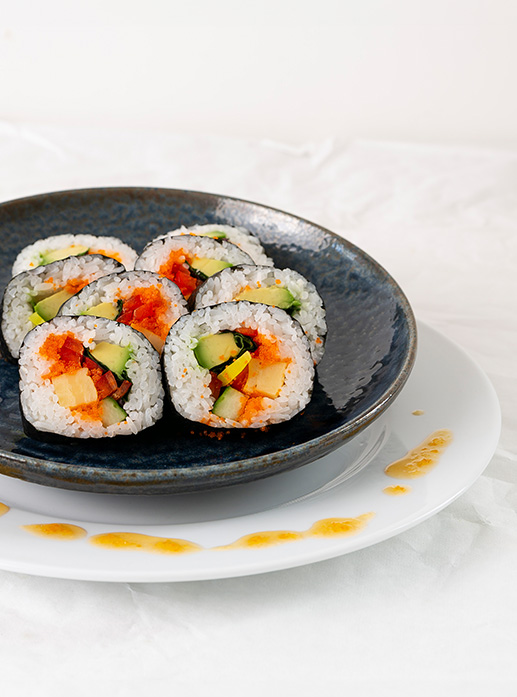
Gimbap, a beloved Korean dish, is renowned for its refreshing flavors and is often mistaken for sushi. Unlike sushi, gimbap is seasoned with sesame oil and salt, and its filling primarily consists of cooked meat rather than raw fish. Gimbap is easy to make and is gaining popularity in the Netherlands. Consider adding this delightful dish to your restaurant's menu.
Ingredients:
- 4 sheets of roasted seaweed (nori)
- 2 cups cooked sushi rice
- 1 tablespoon sesame oil
- 1/2 teaspoon salt
- 1/2 teaspoon sugar
- 4 strips of pickled yellow radish (danmuji)
- 4 strips of cooked spinach
- 4 surimi sticks (optional)
- 1 carrot, julienned
- 1 cucumber, julienned
- 1 tamago slice
Instructions:
- Cook the sushi rice, then transfer it to a bowl and mix in the sesame oil, salt and sugar. Allow the rice to cool completely.
- Lay a sheet of roasted seaweed on a clean, dry surface.
- Spread a thin layer of rice evenly over the seaweed, leaving a small border.
- Arrange the fillings (carrot, cucumber, radish, spinach, surimi sticks, and tamago in a neat row near the bottom edge of the seaweed.
- Carefully lift the seaweed edge closest to you and start rolling the gimbap away from you, tucking the fillings in tightly.
- Roll until you reach the top border of the seaweed, then wet the border slightly with water to seal the gimbap. Apply gentle pressure to secure the roll.
- Using a sharp knife dipped in water, slice the gimbap into bite-sized pieces.
- Serve with soy sauce and pickled ginger for dipping.